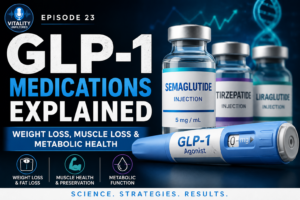
Many people considering GLP-1 medications such as semaglutide and tirzepatide have heard concerns about muscle loss. While there is some truth behind these discussions, the reality is far more nuanced than many headlines suggest.
In this episode of Vitality Unfiltered, David J. Bauder, PA-C, founder of Weight Loss & Vitality, explores the relationship between GLP-1 medications, weight loss, body composition, strength training, protein intake, and long-term health outcomes.
Watch the full Vitality Unfiltered episode here:
GLP-1 Medications and Muscle Loss: Separating Fact from Fiction
GLP-1 Medications and Muscle Loss: Separating Fact from Fiction
GLP-1 medications such as semaglutide and tirzepatide have transformed the treatment of obesity and metabolic disease. Patients are achieving levels of weight loss that were previously difficult to obtain without bariatric surgery. However, one concern continues to surface: Do GLP-1 medications cause muscle loss?
The answer is yes—but not in the way many people think.
Understanding Weight Loss and Lean Mass
Whenever a person loses a significant amount of weight, some degree of lean mass loss occurs. This is not unique to GLP-1 medications. It happens with calorie restriction, low-carbohydrate diets, fasting, intensive exercise programs, and even bariatric surgery.
The important question is not whether some lean mass is lost, but whether the overall body composition is improving.
In most patients taking GLP-1 medications, body fat decreases substantially while metabolic health improves. Blood pressure, blood sugar, inflammation, and cardiovascular risk factors often improve alongside weight reduction.
Why Muscle Loss Can Occur
GLP-1 medications reduce appetite and calorie intake. While this helps patients lose body fat, it can also result in lower protein consumption if nutritional habits are not optimized.
Without adequate protein intake and resistance training, the body may lose both fat and muscle during rapid weight loss.
This is why a medically supervised approach is important.
The Goal Is Fat Loss, Not Muscle Loss
The objective of treatment should be preserving muscle while reducing excess body fat.
Strategies that help maintain muscle mass include:
- Consuming adequate dietary protein
- Performing resistance training regularly
- Staying physically active
- Monitoring body composition over time
- Adjusting calorie intake appropriately
Patients who combine GLP-1 therapy with strength training and proper nutrition often experience dramatic improvements in body composition despite losing weight.
Strength Training Matters
Resistance training sends a powerful signal to the body that muscle tissue is needed.
Even two to three strength-training sessions per week can help preserve lean mass during weight loss. For many patients, combining GLP-1 therapy with progressive resistance training produces better long-term outcomes than relying on medication alone.
Looking Beyond the Scale
Many patients focus exclusively on the number on the scale. However, body composition is often more important than total body weight.
A patient who loses 40 pounds of body fat while maintaining most of their muscle mass has achieved a significant health improvement—even if a small amount of lean tissue was lost during the process.
This is one reason why body composition testing, DEXA scans, and clinical monitoring can provide a more complete picture of progress.
The Bottom Line
GLP-1 medications do not uniquely cause muscle loss. Rather, they accelerate weight loss, and some lean mass loss can occur if patients do not prioritize protein intake and resistance exercise.
The goal should never be simply losing weight. The goal should be improving body composition, preserving strength, protecting long-term health, and creating sustainable habits that support lifelong wellness.
For many patients, GLP-1 medications serve as a powerful tool—not a standalone solution—in achieving those outcomes.
For more information about medically supervised weight loss programs utilizing semaglutide and tirzepatide, visit Weight Loss & Vitality:
https://www.weightlossandvitality.com/services/semaglutide-tirzepatide