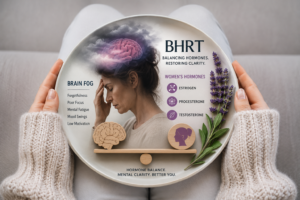
Hormone therapy has become one of the most talked-about—and misunderstood—topics in modern medicine.
Especially when it comes to this question:
- Is bioidentical hormone therapy better than traditional HRT?
You’ve probably heard:
- “Bioidentical is safer.”
- “Traditional HRT is risky.”
- “Natural is always better.”
But like most things in medicine…
The truth is more nuanced.
First, What Is Hormone Replacement Therapy (HRT)?
At its core, hormone therapy is simple:
- You’re replacing hormones that your body is no longer producing at optimal levels.
This is most commonly seen in:
- Menopause
- Perimenopause
- Low testosterone
- Other hormonal deficiencies
When hormone levels drop, symptoms can show up as:
- Hot flashes
- Night sweats
- Mood changes
- Fatigue
- Low libido
- Sleep disturbances
HRT works by restoring those hormone levels—helping bring the body back into balance.

The Two Main Options: Traditional HRT vs Bioidentical Hormones
This is where the confusion starts.
Because both approaches aim to do the same thing…
But they differ in how they’re made and delivered.
Traditional HRT
Traditional hormone therapy typically includes:
- FDA-approved medications
- standardized dosing
- well-studied formulations
These may include:
- Estrogen
- Progesterone
- Testosterone (in some cases)
They come in forms like:
- Pills
- Patches
- Gels
- Sprays
And they undergo:
- Strict FDA testing and regulation for safety and efficacy
Bioidentical Hormone Therapy (BHRT)
Bioidentical hormones are:
- Chemically identical to the hormones your body naturally produces
They are often derived from plant sources and designed to match your body’s natural hormone structure.
There are two types:
1. FDA-Approved Bioidentical Hormones
These are:
- Regulated
- Standardized
- Clinically tested
2. Compounded Bioidentical Hormones
These are:
- Customized for the individual
- Created by compounding pharmacies
- Not FDA-approved (but regulated at the state level)
The Biggest Misconception: “Bioidentical Means Safer”
This is one of the most important points.
- Bioidentical does NOT automatically mean safer or more effective.
Safety depends on:
- Dosing
- Delivery method
- Patient selection
- Monitoring
Not just the source of the hormone.

Why Some Patients Choose Bioidentical Hormones
Despite the misconceptions, there are real reasons why BHRT is appealing.
1. Personalization
Compounded bioidentical hormones can be tailored to:
- Specific dosing needs
- Unique hormone profiles
- Individual response patterns
This can be helpful for patients who don’t do well on standard dosing.
2. Flexible Delivery Options
BHRT can be delivered through:
- Creams
- Ggels
- Injections
- Pellets
- Vaginal preparations
Different routes can:
- Change absorption
- influence side effects
- improve outcomes
3. Better Tolerability for Some Patients
Compounded options can remove:
- Dyes
- Fillers
- Preservatives
This may benefit patients with sensitivities.
What About Risks?
Here’s where we need to be clear—and responsible.
Hormone therapy, in general, can carry risks, including:
- Breast cancer (risk varies based on formulation)
- Blood clots and stroke (higher with certain oral forms)
- Cardiovascular considerations
- Gallbladder issues
But here’s the key:
- Risk is highly dependent on HOW therapy is used—not just IF it’s used
For example:
- Transdermal estrogen often carries a lower clotting risk than oral forms
- Proper screening significantly reduces complications
Modern hormone therapy—when done correctly—is very different from older protocols.
The Real Decision: It’s Not About “Which Is Better”
This is where most people get it wrong.
They ask:
- “Which one is better?”
The better question is:
- “Which is right for THIS patient?”
Because the answer depends on:
- Symptoms
- Lab values
- Medical history
- Goals
- Tolerance to medications
The Bigger Picture: Hormone Optimization Is Individual
At Vitality Unfiltered, we approach hormone therapy differently.
We don’t chase trends.
We don’t push one method over another.
We focus on:
- Individualized care
- Proper evaluation
- Ongoing monitoring
Because hormone therapy isn’t about picking a category.
It’s about:
- Restoring balance safely and effectively
Final Takeaway
Bioidentical vs traditional HRT isn’t a battle.
It’s a spectrum of options.
- Both can be effective.
- Both have risks.
- Both require expertise.
The difference isn’t the label.
- The difference is how the therapy is prescribed, monitored, and tailored to you.
Want to Learn More?
For a deeper breakdown of bioidentical hormones vs traditional HRT, including clinical details and references, read the original article here: